Thursday, June 16, 2016

Rejecting a stalemate mentality


I begin each day with a cup of tea and the internet. I read the news of the day, catch up on Facebook, read a few LinkedIn stories. It is a usually a good way to transition to a day of job hunting or blogging or otherwise working.

Today, not so much.

I’ve been numb since the news of the shootings in Orlando broke. I feel like, as a writer, I should have something profound to say. I should be able to offer deep insight or words of support or encouragement.

But I’ve found nothing to say that seemed worthwhile. That seemed to honor the victims and their family. That honors the magnitude of the tragedy or that doesn’t trivialize it. It is too big. Too important. Too horrible.

In scrolling through Facebook today, however, I was struck by what I needed to say. Perhaps not necessarily what needs to be said, because I can’t presume to know that, but what I need to say.

I have friends all along the political/religious spectrum, so I get to see quite the variety of posts, and, frankly, what I am seeing is mostly crap.

We, as a nation, are, once again, sharing in the aftermath of an unthinkable tragedy that was fueled by hate. Regardless of whether it is hate because of sexuality, or hate because of religion, or hate because of politics, or hate because of gender, or hate because of whatever else it is that we hate, the result is more and more the same: people have to die.

And in the midst of all this hate and sorrow, we somehow feel compelled to cling desperately to our own ideologies, believing, I am sure, that ours are the rights ones. That our outlook on the world is the correct one. That any other viewpoint is not only wrong, but that it will most definitely and absolutely and positively negatively impact our daily lives in a horrible, terrible and no-good way. And our posts overtly or, very often, covertly express that sentiment.

What I see are expressions of our close-mindedness.

Pray all you want, hold candlelight vigils until you are sick, donate blood until you are dry, but if you hold the view that only your view is the correct one and you cannot enter into a dialogue that is meant to educate rather than to proselytize, none of that matters because YOU are part of the problem.

I’ve heard countless times from family that we shouldn’t talk politics because “I’m not going to change your mind and you certainly are not going to change mine.”

That, my friends, is the definition of close-minded.

If we cannot talk, if we cannot share not only what we think but why, then we have no dialogue. We have no communication. We have no engagement.

But we do have close-mindedness. And we have no progress.

And we have no chance of growing as a society and stopping the endless stream of shootings. And rapes. And assaults. And wars.

None.

Because as long as you think you are right, and I think I am right, and we refuse to talk about our views, then we have a stalemate.

In a stalemate, nobody wins. Ever.

EVER.

The board sits and becomes dusty. The pieces don’t move. They all just stare at each other and refuse to move, preferring, instead, to remain trapped forever on their squares. But they are secure in the knowledge that, while they didn’t win, they did not lose.

We are convinced that it is more important for us to “NOT LOSE” than it is for we, as a culture or a nation, to WIN. Are we so entrenched in our hatred of THE OTHER that we prefer to stay smugly on our own little squares, and be thankful that the others stay on their squares, rather than figure out a way to protect all the squares around us?

Based on the long line of ugly, hateful, false memes I’m seeing on Facebook today, I guess the answer is yes.

I started my day planning a transition into a day of productivity, but, instead, I started one reading about hatred, seeing hatred expressed by people that I like and often love, and realizing that we are a culture that actually thrives on the hatred. We express our sorrow, but we then post memes that perpetuate the same hatred that caused the shooting. We say we want it to stop, but then we oppose any discussion on gun control, gay rights, tort reform, campaign reform, or any other move that might affect our ability to “not lose.”

We love our little squares, and it is just easier to stand on it in stalemate knowing that nobody else around us can move either, so we develop an incredibly false belief that we’re all safe.

But we forget that stalemates remain stalemates only as long as the players of the game agree that one has been reached. We forget that one of the players can get pissed off because of the loss, and that person can take his or her arm and wipe the board clear.

Or a stranger can walk into the room and decide that the stalemate makes him or her uncomfortable, or threatens their own game, and the board can be wiped clean.

Or a disaster can strike, and the board and everything around it can be destroyed.

Wouldn’t it be much smarter if we turned away from the board for just a minute and actually listened to The Other? Listening doesn’t mean acquiescing. It just means really listening. And considering the other point of view. And asking yourself if you might need to sacrifice your own square to save the entire board?

Wouldn’t it be nice to open Facebook tomorrow and see a dialogue occurring? One that aimed to heal a very broken country? And one that clearly said that we are listening clearly and allowing our own positions to be challenged?

Wouldn’t that be nice.

Thursday, June 2, 2016

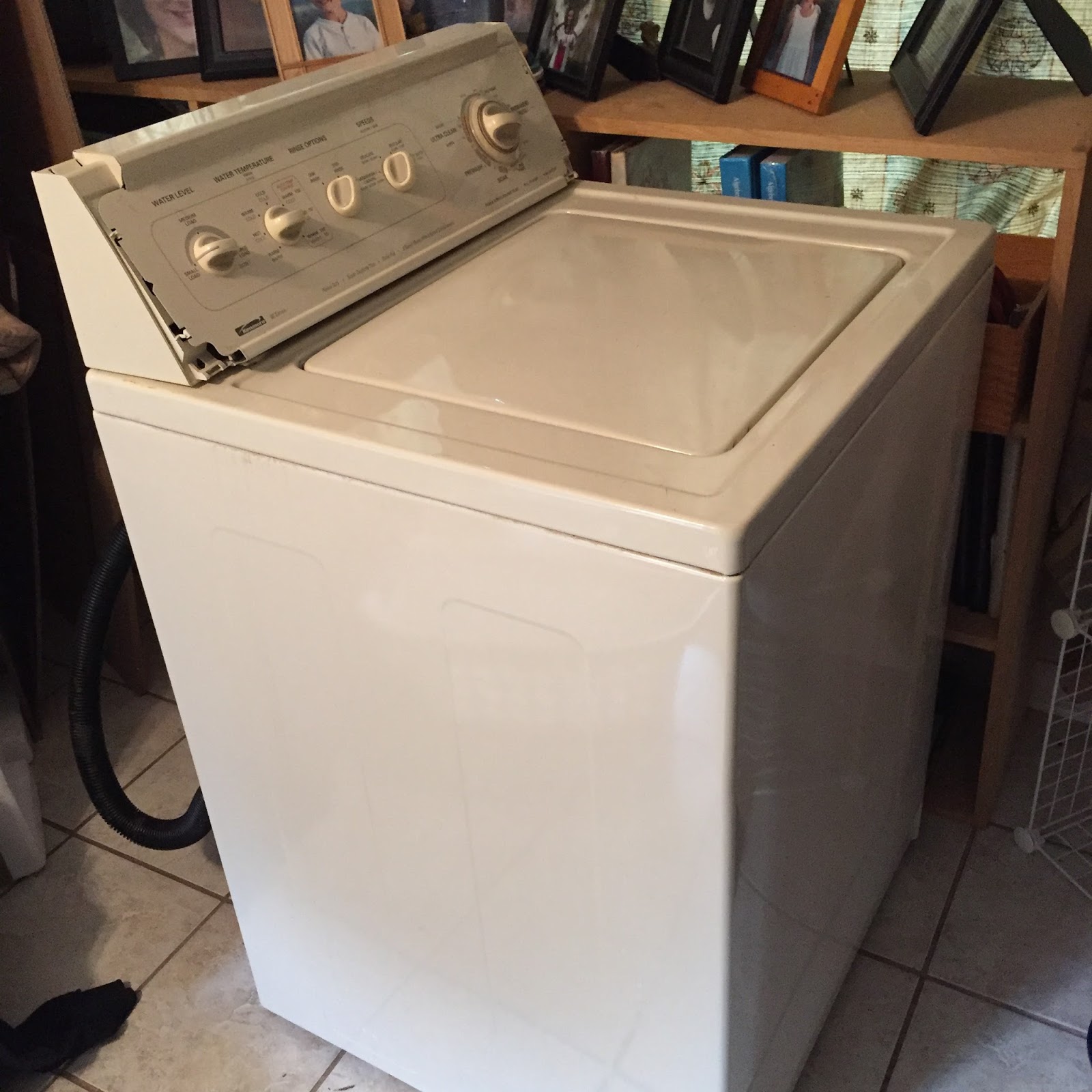
Lessons from a washing machine


Today, I had to get a new washing machine.

Believe me, that’s not an easy thing for me. I hate having to buy new things. I would very much prefer to fix the old and carry on.

But my washing machine broke a couple of weeks ago, and, in spite of my attempts to fix it, the poor thing was just done. I had no choice. I had to replace it.

As I was doing my first load of laundry in the new machine, with the old one still sitting sadly in the corner, I found myself seeing management lessons in the experience of the past few weeks.

I know. It sounds crazy, but stick with me here, and hopefully you will follow my nutty analogy.

My old machine was a generally good machine. It did what I asked of it, it did so with little need for oversight, and it was dependable. That really is like a lot of employees. In general, they are good and honest and will do their jobs well.

 The old machine was a good one

We got it at an estate sale years ago, and when we got it home, we found that the hose connector threads had been sheared off. The machine was in perfect working order but it had to have the threads to work. I found the piece online, and I replaced it. The machine just needed some attention up front, and it has worked incredibly well ever since.

New employees are like that. They aren’t perfect. They bring habits from old jobs, different knowledge sets, and a unique way of seeing the world. In order to help them reach their potential in our specific cultures, it is vitally important that we spend some time giving them attention up front. On-boarding is perhaps the most important training we can give our employees. Conversely, failure to do so will be costly down the road.

With my old machine, I made sure that I cared for it properly. I kept it cleaned and I removed dust and dirt from inside the casing from time to time. Every now and then, a load of clothes would become imbalanced, and it would shriek and moan, but I would just stop the machine, rearrange the wet clothes, and then let it get back to washing.

Similarly, if we, as managers, don’t care for our employees regularly, they likely will break down. Or check out. It is important to hear their cries for help and to address them. We should provide plentiful and genuine praise for jobs well done. We should be providing training regularly. We should be giving employees ample opportunity to grow. And we should do whatever we can to keep the loads balanced so that they don’t work so hard that they eventually break down.

At some point, though, all employees will have to be replaced. Perhaps they decide to retire, or perhaps they move on to a new opportunity. In those cases, we support them and make sure they understand how grateful we’ve been for the work they’ve performed.

But sometimes a part breaks and it cannot be fixed. My machine just stopped spinning. I tried replacing the coupler and the agitator dogs. Neither worked. I checked the clutch, and it seems fine. In spite of my repeated efforts to fix it, the machine was just broken beyond my ability to repair it. Once I realized that, I began immediately working on getting a replacement.

All too often these days, employers are quick to replace “broken” employees. And there are times when doing so is necessary, but I can’t help but wonder how many employees are replaced because managers won’t or can’t put in the time to try and fix the problem.

It is hard to tell an employee that he or she needs to improve, but I think most of them welcome the chance to improve (even if it hurts initially). Maybe the fix is a simple one, like retraining or just increasing awareness. Perhaps the fix takes a little more time, like developing an employee improvement plant. Sometimes, a disciplinary action works as a course correction. In general, though, I have found that investing in employees and helping them to grow is a better move than jumping to replace. It takes time and money and heart to make an employee a part of your team initially, and, if you lay the proper foundation, those efforts will help you to retain an otherwise good employee. I spent a lot of time watching YouTube videos and reading blogs to try and diagnose the washer’s problems, and I attempted every single fix I could find. It was worth it to try and retain an otherwise good washing machine.

But at times, we have to admit that the relationship is just not working. I went to a laundry mat once and realized that doing so regularly would cost me a lot of money. I spent hours educating myself and then taking the machine apart. I bought a couple of parts, and neither worked. I had to admit that hanging on to the washer was starting to cost time and money, and it was time to let it go.

But employees are not machines, and realizing that it is time to let them go is difficult—or it should be. Eventually, though, you have to weigh the best interests of the company and its clients or customers. You have to consider the needs and expectations of employees and management. You have to look at a bigger picture. When remediation no longer works, you have to part ways.

I feel sad that I wasn’t able to fix the old machine. I hope to be able to give it to someone who can fix it and who can make it useful again. And that’s always how I feel about employees who have to move on. I know that they are just the right person for some position somewhere, and I hope that they are able to land there.

In the meantime, though, I am on the third load of clothes, and, honestly, I’m thrilled that I have a machine that works, because having it frees up time for me to work on other tasks and chores. It allows me and the rest of the family time to be otherwise productive, and we can readily have the right clothes necessary for the different jobs that we do.


My new top-loader is nice to have


But, as I’ve said, employees are not machines, and if we start seeing them as such, we’ve lost our ability to be good managers. The lessons learned here are valuable, though, and I made the right decision to get a new washer. But, given a choice, I would still have the old one spinning in the background and continuing on as a productive part of this household.

It’s not easy letting it go.

Thursday, May 26, 2016

Soft Skills Again? Or Still? Really?


If you've been in the workforce for more than a few days, you've probably heard all about the need for soft skills. I can hardly open up LinkedIn without finding a post or an article on the importance of soft skills in business.

Are they really that important? Isn't it more important to have skills? And certifications? And education?

Well, yes and no.

Skills and a pedigree are valuable and oftentimes necessary; however, skills can be taught, and an education can be attained. But soft skills are fundamental, and most employers are not able or willing to spend time and money to help employees develop them.

In the previous post, I indicated that I hired photographers for many years, and I always valued the soft skills, like artistry and customer service, over the hard photography skills. Our studio could teach the skills, and, in fact, we often wanted to teach skills that aligned with our style and habits. On the other hand, we couldn't teach creativity and an artistic eye. Those talents take years to develop, and they are intensely personal. Additionally, we didn't want to teach customer service because we believed that people either knew how to treat others with kindness or respect or they didn't. If they didn't, we were not interested in bringing them on board to represent our studio.

For us, soft skills were not just important; they were non-negotiable.

While the list of soft skills traits can vary from person to person, in general, they include the following qualities:

1. Solid Communication
2. Critical thinking or problem-solving
3. Teamwork
4. Flexibility
5. Time management
6. Dependability
7. Decision-making
8. Leadership
9. Self-motivation
10. Humor

These are just a few. I've seen lists with many more qualities, but, in general, soft skills are inherent qualities that people have that will make them likely to be successful employees.

Communication and critical thinking are fundamental for soft skills as well as hard skills, so I plan to spend time discussing both in depth. Ultimately, though, improving any or all of these qualities in ourselves will not only make us valued employees, but it will help us grow personally as well. That's a bonus that is too good to pass up, right?

An intro to Audience Awareness


Several years ago, I was just about to purchase my very first new car. I had chosen the make and model, I had negotiated in a way that would make my dad proud, and I was ready to close the deal. We were half-way through the paperwork when we hit a snag. I had my heart on a champagne color car, but the dealership had none in stock. The salesman became nervous, realizing that the deal was about to fall through. He couldn’t find my color anywhere, and he was determined to save the sale. He finally became frustrated with me and insisted that I buy a blue car that was in stock. I became frustrated, too, and asked him why I should consider the blue car. His answer? “Because blue is MY favorite color.”

Umm, really? The salesman apparently had decided that my needs were less important than his sale. Unfortunately for him, I didn’t feel the same.

My experience is a great example of one of the most important considerations in communicating: audience awareness.

Over the years, my English students have heard me utter that phrase countless times. And for good reason.

Understanding our audience is vital to communication if you hope to have your message received successfully.  Specifically, what is it that they need to hear/understand and HOW does it need to be delivered it in order for you to accomplish your objective? That understanding should inform every step you take in the communication process, from brainstorming to delivery and follow-up. Everything.

Yet it can be the most difficult thing to understand. If we are communicating with others, we think that what we need to say is the important thing. We yearn to tell our listeners what is on our mind. We think they should buy the blue car because it is our favorite color.

But that rarely works.

Think about this especially when you are writing a resume. We often make the mistake of thinking that we need to create resumes that tell the reader what we’ve done, but I would argue that doing so is a huge mistake.

Instead, write with the potential employer in mind. Read the job announcement carefully. Analyze it. Usually, you can see a theme emerge that reveals the skills, experiences, or qualities that the employer thinks are the most important, so tailor the resume to address those needs. What can you do for the employer? That’s what he or she wants to know.

As a photography studio owner, I interviewed a lot of applicants. I also wrote the job opening announcements, and I always emphasized that artistry and client service were the most important skills, even more so than photography knowledge. I knew that we could teach someone the basics of photography, but artistry can’t be taught, and I had neither time nor inclination to teach someone how to treat people with respect.

Yet, I routinely got resumes that started with a listing of the equipment the person could use. They tried to impress me with what they felt was important instead of trying to understand what I indicated was necessary.

If you’re lucky enough to get an interview, make sure you continue being aware of audience and focus on the needs of the employer. Try to answer questions in a way that lets them know that your participation would help the business succeed and grow instead of furthering your own needs.

During an interview, once, I asked an applicant why she wanted to work for us.

What she said: I want to learn how to run a studio so that I can open my own studio some day.

What I heard: I want you to train your future competition.

Once again, I felt like I was being coerced into buy a blue car when what I really wanted was the champagne one.

Both the job applicant and the car salesman learned hard lessons about the need for audience awareness in their careers. Had they understood my needs/wants, the relationships might have ended successfully for all of us. Instead, I declined both the car and the applicant.

I ended up hiring an amazing woman whose photographic eye was magic, even though she had never taken a picture professionally. And her customer service was unmatched. Our clients loved her, and she contributed tremendously to the growth of the studio. She stayed with us for several years, and she is still a dear friend.

I left the car dealership without a new car. I visited a competitor a few days later, and they listened carefully to what I was saying. They never tried to convince me that I needed something else; instead, they were able to find the car for me out of state, and they arranged to have it delivered to me. I left that dealership a very happy customer, and I drove my little champagne Corolla for over 10 years.

Developing the ability to understand your audience will serve you well in personal and professional relationships. The message and the delivery have to fulfill the needs of the listener. We need to remember that it really isn’t about us, after all.

Tuesday, May 24, 2016

Finding the Silver Lining in Unemployment

Unemployment is difficult, at best. There's the stress about money, the trauma of change, the chance for depression to slip in if one is not careful. It's just not a good time.

But during the past four months, I've also discovered a lot of positive things as a result of this extended time off, and I am starting to think of this as a very needed course correction.

First, there has to be a balance between work and life. For me, that's always been a tough thing. I find that my identify and feelings of self-worth are intricately tied to my work, which is not necessarily a bad thing UNLESS work becomes the predominant influence of those things. I am an 'all-in" kind of person, so, to be honest, I've not always managed the work-life balance as well as necessary because work became life.

Being away from that has helped me to understand that  unemployment provides a forced break in the cycle. A chance for a new start. With the next job, I now have the benefit of hindsight and introspection, and I think I will give my all to my job, but I will give the same to my family but both in their own time.

Second, human interaction cannot be overrated. As anyone who has searched for jobs in the past decade knows, job hunting has become completely automated. Human beings are no longer a big factor. We fill out applications online. We get an automated receipt email. A few weeks later, we get an automated rejection email. Or if we do get past the initial electronic gatekeepers, we are offered a short phone interview with very canned questions (they really ask the same ones over and over). Or we receive absolutely nothing at all.

So on those very rare occasions when we can genuinely communicate with a person who uses our names or asks how we are, even if it is via email or phone, we are strikingly reminded of the value and importance of human interaction. I've sent several follow up emails to thank interviewers for their time, and often that has been the end of our communication. Today, I received three responses to my follow-ups from managers at one firm I interviewed with, and I was surprised at how good that made me feel. It's not about the job prospect. It's not about reading into the communication and trying to figure out what it all means. It's about decency, kindness, manners and human interaction. Unemployment is tough, but one short email simply says to the recipient that they were noticed and worthy of a response. And for job seekers, that means a lot.

Third, work expands to fit the time allotted. Once I got over the initial shock of being unemployed, I figured that I would use the time in between job searching to tackle projects I never had time to address while I was working. Go ahead. Fellow unemployed can laugh with me or at me. I find that I am as busy now as I was when I was working. The job search takes up an enormous amount of time. Additionally, I find myself playing with the pups, and running errands, and doing basic cleaning. In essence, I am doing all the things that I did while I was working, but it is just taking a lot longer to complete and I'm not even doing those things extra well. As for all those projects I wanted to tackle? Not a closet has been organized. Not a carpet has been cleaned. And my car has not been washed even once. There simply has been no time.

Finally, staying productive helps with staying positive. This one is intricately linked the the third point. There's a difference between staying busy (errands, housework, etc) and being productive (completing projects from start to finish). I did make a quilt and pillow shams for my bed, and I realized how good that made me feel AND how much that success fed my energy for doing other projects. So, I finally resorted to opening my planning journal last week, the same one I used to plan my time when I was working. It's been sitting on my desk for months, but I didn't see any real reason to use it. Until now. I start the week by making a "to do" list, including jobs to pursue, projects I want to tackle and cleaning/organizing chores that need to be done. I also use the time to plan for the future--wishes, hopes, long shot dreams. And I've found that it works. The daily chores get done and provide immediate gratification. The projects take time and energy but make me  feel like I am accomplishing something. And the future items? Well they provide the reason for doing everything else. They are reminders that the steps I take today will lead me into tomorrow and beyond.

Being unemployed stinks, for sure. But since I have to live this experience for right now, I might as well try to find something positive in it.

Now I can check "write blog post" off my list, and I already feel the surge of energy from accomplishing something today. It's a win!


Thursday, May 19, 2016

I feel ya, Stannis Baratheon

Stannis Baratheon would understand.

I'm spending a lot of time listening to the radio as I finish retouching a huge set of images. I can tune out most of the drivel, but there is a Home Depot commercial that is driving me nuts.

Apparently, they are selling a new colored mulch. And it lasts a really long time. So long, in fact, that they proudly proclaim "that means less touch-ups."

At first I wondered if I was I hearing that correctly. Surely a huge company with a huge marketing department and huge budget would not release a spot with such a simple usage error. Would it?
It would and it did. I've heard it multiple times now.

I suppose one could argue that Home Depot got my attention, and as any marketing person knows, even bad publicity is good. The problem is that this irritates me because it is so simplistic. And it makes me wonder why someone didn't catch it. Is good and proper communication that difficult, that much of a bother, or that irrelevant now?

Sigh.

Like Stannis Baratheon,* all I can do is mutter "fewer" under my breath every time I hear it.

Fewer.

It's really not that difficult.


*Game of Thrones fans will understand the reference from Season 5, "Kill the Boy"

Communication Skills 101


Communication is the key to, well, everything. We use it to ask parents for money, to order fries at the drive through, to apply to colleges, to shine in a job application, and to work with our colleagues. My parents have a unique way of communicating since my dad is very hard of hearing, but they make it work. The bottom line, though, is that we all know how to communicate.

But how well? Good communication is very different from communication. Take for example, again, my parents. My mom asked my dad today whether or not he would ever like a Kindle. He looked at her and asked her what she thought was simple. Technically, they communicated, but clearly they didn’t communicate  well.

In business, good communication skills are vital to meeting objectives. Unfortunately, though, too often, we focus on what we want to say instead of being aware of what the recipient needs to receive or what we need them to understand.

Recently, I applied for a job. My procedure is to copy the job announcement and to put it in a spreadsheet. I then isolate each required or desired skill or experience and the line descriptions of the daily responsibilities. Then, I measure my experience or education with those. If I am at least an 85% match, I will apply.

I found a job, and my match rate was around 95%, so I applied. The next week, I got an email thanking me for my application but indicating that they were pursuing candidates whose skills more closely matched the job.

Now, for the sake of argument, we might say that they had several good candidates whose skills were a 96% or better match. But that’s probably unlikely (not to mention risky HR decision-making).

We can suggest that my resume didn’t include the right keywords for the automated readers, although I generally use the language in the job announcements to complete the resumes just for this reason.

More likely, I suspect, is that what they wrote in the announcement didn’t actually reflect what they wanted in a candidate. While I was very qualified for the job they announced, I probably was not qualified for the position they wanted to fill.

They probably knew what they wanted, and they thought that they explained it, but they fell short. They've shifted responsibility for good communication from them to the recipient, and that is simply not smart. I’ve heard it over and over again from students whose papers received low grades. When I explain that the work didn’t reflect what they really were trying to communicate, they reply, “but you know what I meant.”

Well, no. No, I didn’t.

As a writer, it is your responsibility to write with me in mind. Literally. If you want to convince me to vote for your candidate, you need to envision me as a voter sitting with you and resisting your argument. You’ll write for me that way.

If you are an employer seeking to fill a position, you need to imagine me sitting next to you, completely unfamiliar with you, your company or the position, while you explain to me carefully what you need to see in me to make a match.

And, if you are a job seeker, you will complete the cover letter and resume with the employer in mind. Think about what he or she needs to see, hear, and understand. Write with a person other than yourself in mind.

Good communication requires remembering this very important fact: it’s not about YOU.  Seriously. You can communicate all you want and as well as you want, but if you don’t reach ME, the recipient, you might as well have skipped the effort completely.

Good communication requires two parties: the sender and the receiver. (I know if you are a communications academic, you will argue that there are more parts, which is true, but we'll touch on those things later. Here, I'm simply reducing to essentials.) As the sender, your message can only be successful if it resonates with the receiver. If it is clear and understood by the receiver. If it speaks to the receiver.

If you want your receiver to buy a Kindle, you've got to understand his needs, his level of understanding about Kindles and what you need to do to ensure that he receives that message accuratelyIt's your job to deliver the clearest message you can if you want to have meaningful communication. It really is that simple.